


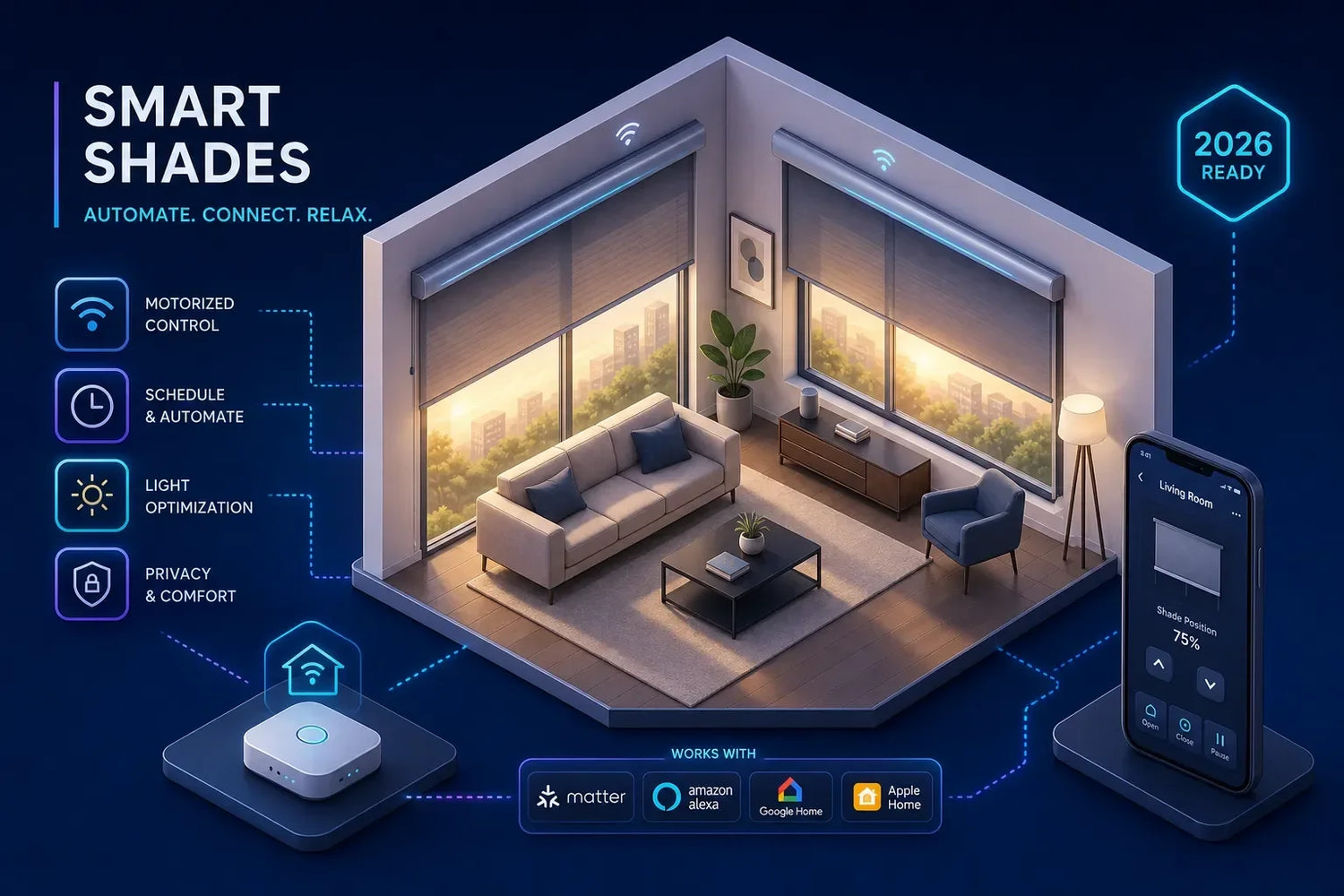
You open a browser tab to shop for automatic curtains for windows and immediately face a wall of options: a $90 clip-on device, a $600 smart rod, a $1,500 installed track system, and motorized shades that don't use tracks at all. Every product page claims to be the easiest solution. None of them explain how they're actually different. That's exactly what this guide solves.
There are three fundamentally different ways to automate a window. The first adds a motor to hardware you already own. The second replaces your curtain hardware entirely with a purpose-built motorized track. The third skips the curtain-and-track concept altogether and uses motorized shades instead, what some manufacturers call electric curtains or automated drapes. That third path is where KEEGO® Blinds lives, offering custom motorized roller, zebra, and cellular shades with a no-drill mounting system and full smart home compatibility. No track installation. No electrician. No wall damage.
By the end of this guide, you'll know which type fits your window, which power source suits your home, which specs actually matter, and what a realistic budget looks like in 2026.
How to choose automatic curtains for windows: the three systems worth knowing
Retrofit curtain motors: the add-on approach
A retrofit motor is a battery-powered or rechargeable device that clips onto your existing curtain rod or track and moves your curtains open and closed via an app or remote. SwitchBot Curtain 3 and RYSE SmartCurtain are two common examples in the U.S. market, and both install without tools. You clip them on, charge them up, and pair them to an app. Your curtains stay. Your hardware stays. You spend somewhere between $80 and $300 and gain motorized control without touching a wall.
The tradeoff is straightforward. These motors work best with lighter to medium-weight curtains and need periodic recharging, typically every one to four months depending on usage frequency. For most finished homes and apartments, that's a perfectly reasonable compromise.
Purpose-built motorized track systems
A full motorized track system is a complete track with an integrated motor, installed fresh rather than added to existing hardware. These are what you find in high-end renovations and new construction. They handle heavier drapes and wider spans, and they look clean because the whole system is designed as a unit from the start.
The cost of that polish is real. Purpose-built motorized tracks require drilling, power planning, and usually professional installation. Retrofitting one into a finished room means running cable through walls and coordinating with an electrician before the first curtain opens. This is the right choice for a renovation, not for a quick upgrade to an existing space.
Motorized shades: a damage-free alternative to curtain tracks
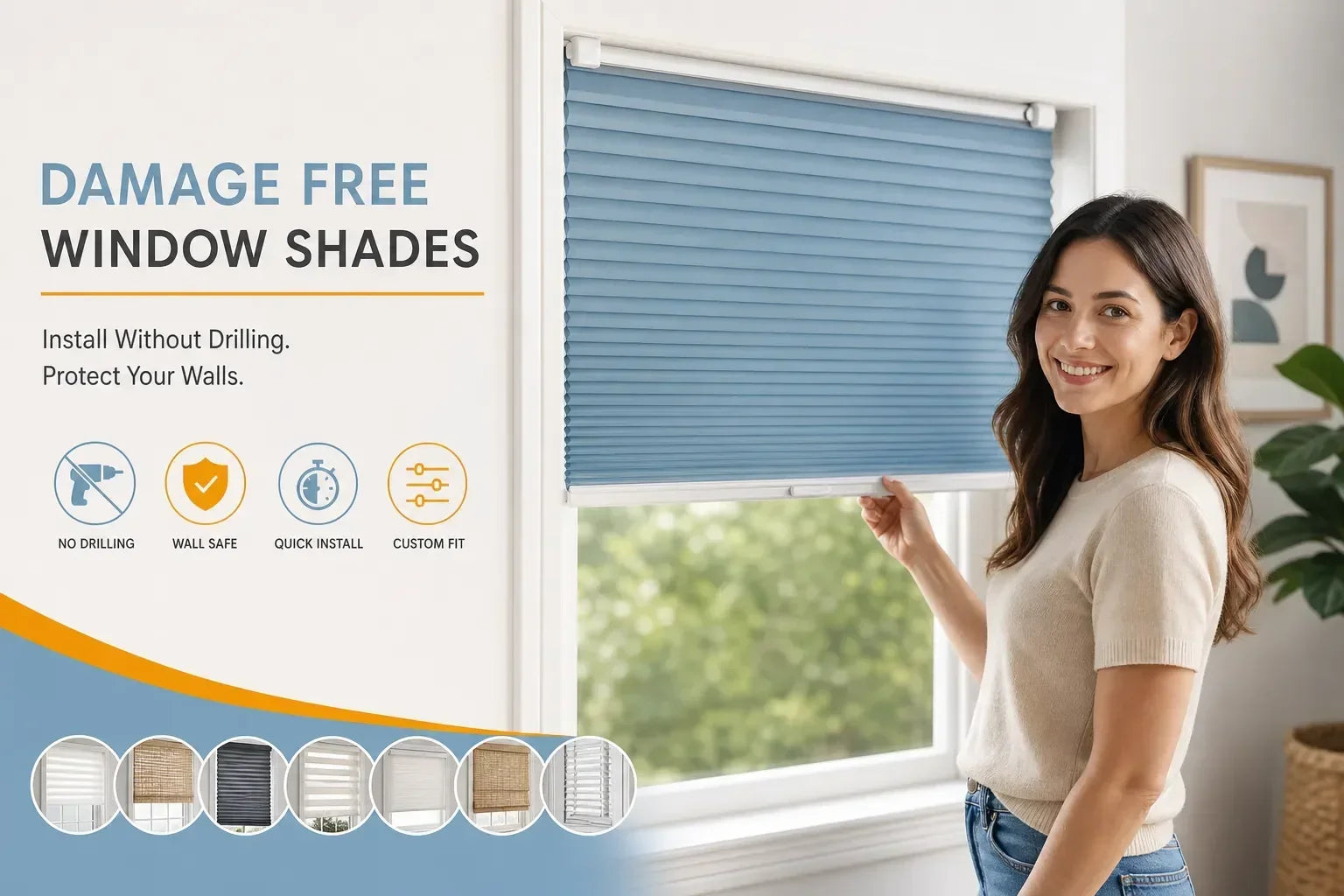
Instead of automating existing curtains or installing a new motorized track, a motorized shade handles light control, privacy, and smart home integration in one purpose-built unit, no track required. Think of these as smart window shades rather than automated drapes: the entire curtain-and-rod concept is replaced by something purpose-engineered for motorization. KEEGO® Blinds falls squarely in this category, offering custom motorized roller, zebra, and cellular shades with a no-drill mounting system that leaves zero wall damage.
For renters, damage-conscious homeowners, or anyone who wants motorized windows without coordinating a contractor, this is the most direct path. KEEGO® shades connect to app and remote control and slot into existing smart home setups without any wiring work. You measure, order, and mount it yourself, no track to install, no professional installation fee, no holes left behind.

Battery vs. hardwired: picking the power source that fits your life
Why battery and rechargeable motors work for most homes
Rechargeable motors dominate the retrofit market for a simple reason: they require zero wiring work. Setup means charging the motor, clipping it on, and pairing it to an app. Most rechargeable motors hold a charge for one to four months, and because they're self-contained, they keep working through a power outage when hardwired motors go dark.
Battery motors work best with lighter to medium-weight curtains. As curtain weight and span increase, the motor starts to strain, wide blackout drapes, heavy lined panels, or any curtain that's difficult to pull by hand will likely push a rechargeable motor past its comfort zone. If you're in that territory, a hardwired option is worth the additional planning.
When a hardwired AC motor is the better call
Hardwired motors draw power continuously from the wall, which gives them stronger pull and eliminates the recharging routine entirely. They're the right choice for heavy lined drapes, wide windows, or any installation where you need consistent performance over years without maintenance. The motor is always ready because it's always powered.
The practical catch: retrofitting a hardwired motor into a finished room means opening walls to run cable and bringing in a licensed electrician to size the circuit and wire everything to code. As a rough planning guideline, expect around 2 amps per motor on a dedicated 120V circuit. That level of disruption makes sense for new construction or a full renovation where walls are already open, but it's a significant undertaking to add to a finished room you're not otherwise touching.

Automatic curtains for windows: track types and specs that actually matter
Rod, U-rail, and I-rail: matching your hardware to the right motor
Round rods are the most common curtain hardware in American homes. U-rail and I-rail tracks are ceiling-mounted systems more common in modern or European-influenced interiors. Before you buy any retrofit motor, identify which type you have, the motor must match your hardware.
SwitchBot Curtain 3 covers round rod and U-rail installations without tools; I-rail support was listed as coming soon as of mid-2026, so verify current availability on their product page before purchasing. Aqara Curtain Motor E1 covers all three, rod, U-rail, and I-rail, making it the more flexible option for ceiling-mounted track installations. Identify your hardware first, then narrow your motor options.
Noise, speed, and weight limits: the numbers worth checking
Most mainstream curtain motors run between 35 and 45 dB during operation, with premium quiet models staying under 35 dB. SwitchBot Curtain 3 in its QuietDrift mode measures around 25 to 30 dB; in standard mode it climbs to roughly 42 to 51 dB depending on the setup. Typical open and close speed across consumer motors runs about 15 to 20 cm per second, smooth and unhurried rather than jarring.
Weight capacity is the spec most buyers overlook. Mainstream consumer motors handle roughly 35 to 60 kg of curtain weight. Choosing a motor rated below your curtain's actual weight leads to grinding, slipping, or premature motor failure. Weigh your curtains before selecting a motor. It takes 30 seconds and prevents a costly return.
Smart home compatibility in 2026: what the ecosystem labels actually mean
Alexa, Google, and Apple HomeKit: native vs. hub-dependent support
Every product box says "works with Alexa," but not every product connects to Alexa the same way. Some motors achieve compatibility natively over Wi-Fi. Others, like SwitchBot Curtain 3, are Bluetooth-only out of the box and require a separate hub (SwitchBot Hub 2) to unlock Alexa, Google Home, and Apple HomeKit integration. That hub adds to your total cost and to the setup process.
Aqara Curtain Motor E1 and Motionblinds offer broader out-of-the-box compatibility across major platforms. Before you buy, check whether the product's smart home support is native or hub-dependent, and factor the hub cost into your budget if it's required. A motor listed at $90 that needs a $40 hub is a $130 purchase.
Matter: why it's worth caring about in 2026
Matter is the smart home protocol designed to make devices work across Apple Home, Alexa, Google Home, and SmartThings without brand lock-in. A Matter-certified curtain motor connects through a compatible hub or Thread border router and works in any of the major ecosystems. Motionblinds and Aqara both carry Matter certification, which means they share position control and automation commands consistently across platforms. The Window Covering cluster in the Matter spec handles open, close, and percentage positioning in a standardized way.
If you're building or expanding a smart home setup, choosing a Matter-certified motor now avoids re-buying hardware later, the protocol is explicitly designed for multi-ecosystem households. KEEGO® Blinds' motorized shades also support app and smart home integration, making them a natural fit for connected homes without requiring complex network configuration or a professional installer to program them.
What automatic curtains for windows realistically cost in 2026
The DIY retrofit budget: $80 to $300
Entry-level retrofit motors like SwitchBot start around $80 to $90. Mid-range smart curtain rods and track kits run $190 to $270. Add a hub if your chosen motor requires one, and you're typically spending $250 to $350 total for a single window. This is the lowest barrier to entry and suits anyone who already has curtains and a rod and simply wants motorized control added on top.
This range delivers genuine value if your curtains are already in place and on the lighter side. For heavier or custom window treatments where you're starting from scratch, the retrofit math changes quickly.
Mid-range to premium installed systems: $450 and up
A purpose-built motorized track system installed professionally starts around $450 per window for a straightforward setup. Wide windows, blackout systems, or complex smart home wiring push that number to $1,500 or more per window. High-end custom drapery with motorized tracks can reach $2,500 per window or beyond when you factor in fabric, labor, and integration programming.
KEEGO® Blinds' motorized shades are a different category altogether. They're custom-made to size using a guided measurement tool with real-time price quoting online, so you get a professional-looking motorized window treatment without the professional installation bill. Because the no-drill mounting system is designed for self-installation, there's no contractor to schedule, no wiring to plan, and no installation fee to absorb on top of the product cost.
How to choose the right setup for your specific windows
The renter or no-damage route
If drilling is off the table, whether because of a lease agreement or personal preference, the choice narrows quickly. A battery-powered retrofit motor works if you already have curtains and a compatible rod. But if you're starting fresh or want a cleaner, more integrated result, KEEGO® Blinds' motorized shades offer a compelling path: no track to install, no wiring to run, no holes in the wall. The no-drill mounting system also means you can take the shade with you when you move; installation and removal leave the wall exactly as they found it.
The homeowner ready for a full motorized system
If you're renovating or building from scratch and automation is part of the larger plan, a purpose-built motorized track with a hardwired AC motor is worth the investment. Choose a Matter-certified motor so your curtain system works across any smart platform you add later. Plan the wiring before walls close, size the circuit for the motor load, and budget for professional installation.
Know your curtain weight, identify your track type, and decide whether you're retrofitting or starting fresh. Each scenario maps to a clear product category: retrofit motors for existing setups, purpose-built tracks for full renovations, and motorized shades for the no-damage, no-contractor route. The right answer depends on your window, your walls, and how you want to live in the space once it's done.
The decision, made simple
Automatic curtains for windows range from a $90 weekend project to a $2,500 custom installation. The right choice isn't about budget alone; it comes down to your curtain weight, your wall situation, and the smart home ecosystem you're already in. Retrofitting an existing setup is fast and affordable. A full motorized track delivers premium, permanent performance. Motorized shades sidestep the track question entirely, without sacrificing style or smart home functionality.
If you want the no-drill, smart-home-ready option built for modern American homes, explore KEEGO® Blinds' motorized shade collection. Use the built-in measurement finder to get your custom size and a real-time price quote before you commit to anything. No contractor required, and no wall damage when you're done.
Learn More
What are the benefits of installing smart blinds in your home? This article walks you through.
How to choose motorized blinds for your window? Learn more here.

Leave a comment
All comments are moderated before being published.
This site is protected by hCaptcha and the hCaptcha Privacy Policy and Terms of Service apply.